|
Understanding the core concepts of BLM sets the foundation for assessing your organization's maturity level. Explore how our structured Maturity Model guides your journey from initial implementation to full integration. |
What is BLM
Building Lifecycle Management (BLM) is a strategic approach to managing buildings from conception through deconstruction, ensuring optimal performance, efficiency, sustainability, and resilience at every stage. It integrates people, processes, and technology to streamline operations, improve decision-making, and maximize the value of the built environment. BLM aligns with the principles of ISO 15686, which defines the lifecycle of buildings in distinct phases to ensure consistency, performance, and longevity.
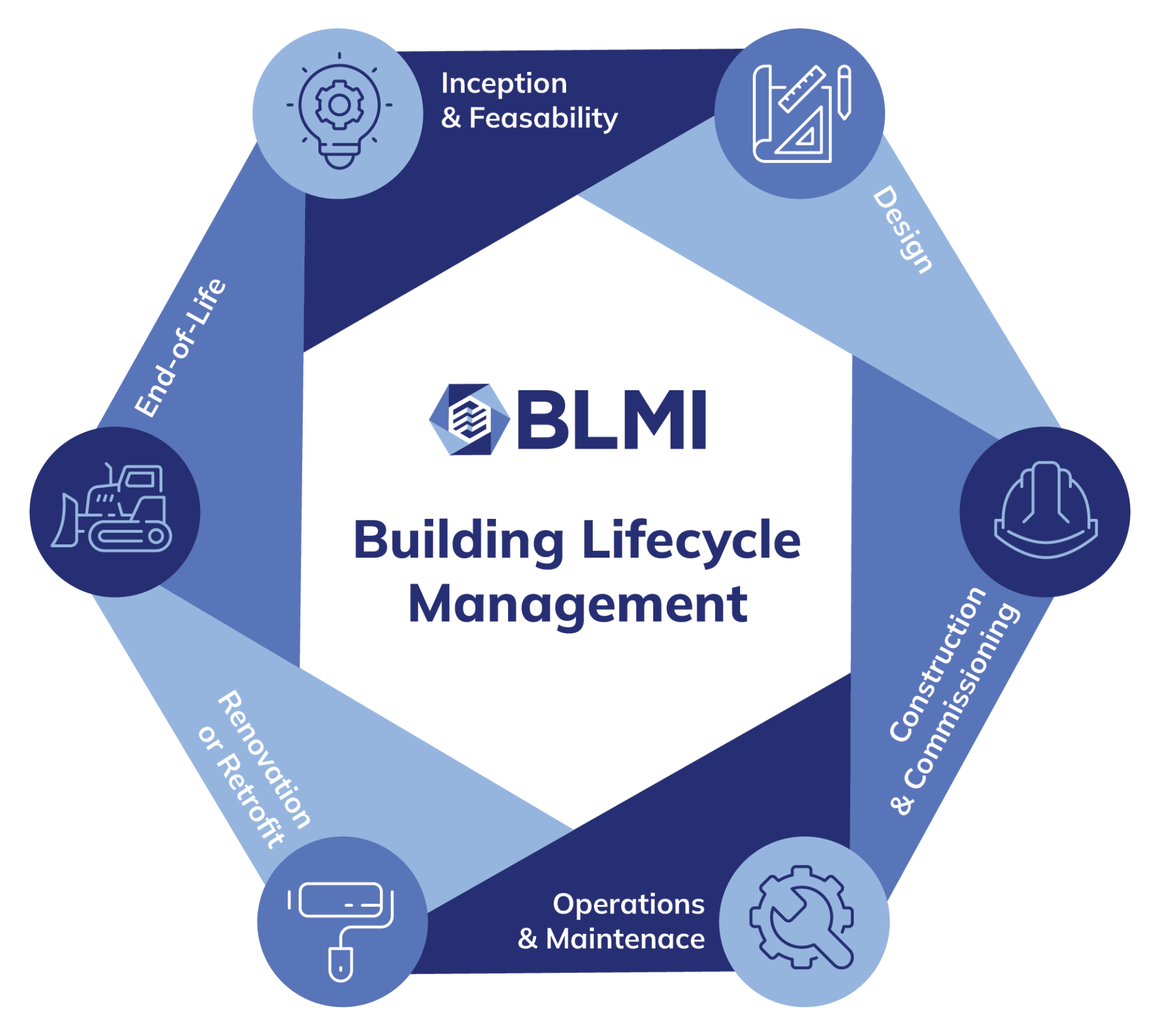
Key Phases of Building Lifecycle Management (Aligned with ISO 15686):
-
Initiation & Briefing: The initial phase where project requirements, functional needs, and performance objectives are defined, ensuring alignment with long-term sustainability and operational goals.
-
Design & Development: A critical stage where design decisions incorporate lifecycle costing, material selection, and integration of smart building technologies to enhance long-term performance.
-
Construction & Commissioning: The execution phase where quality control, compliance with design specifications, and commissioning processes ensure that building systems function optimally from day one.
-
Operations & Maintenance: The longest phase, focusing on maintaining building efficiency, safety, and occupant comfort while leveraging data-driven approaches such as predictive maintenance and digital twins.
-
Refurbishment & Adaptation: Addressing evolving needs, this phase includes upgrades, retrofits, and repurposing strategies to extend a building’s functional life while optimizing energy performance.
-
End-of-Life & Deconstruction: Responsible deconstruction ensures proper material recovery, waste management, and compliance with environmental regulations, contributing to circular economy principles.
Learn more about the Building Lifecycle Management Initiative by listening to the introductory podcast below.
The Role of Data & Technology in BLM
Building Lifecycle Management is powered by data integration and advanced technologies. Under the BLM framework, Data Lifecycle Management (DLM) plays a critical role in ensuring that accurate, structured, and actionable data is captured, maintained, and utilized effectively at every stage of a building’s lifecycle. The two go hand in hand, as high-quality data is essential for optimizing building performance, reducing costs, and ensuring asset longevity.
Tools such as Building Information Modeling (BIM), Digital Twins, and IoT-enabled sensors provide real-time insights, enabling stakeholders to make informed decisions throughout a building’s lifecycle. These technologies support predictive maintenance, energy optimization, and enable long-term strategic planning, reducing costs and enhancing building performance.
Benefits of BLM
-
Improved Efficiency: Streamlines processes across all lifecycle phases, reducing waste and unnecessary costs.
-
Sustainability & Resilience: Supports energy conservation, carbon reduction, and environmentally responsible building practices.
-
Data-Driven Decision Making: Ensures stakeholders have access to accurate, real-time information for optimizing performance.
-
Lifecycle Cost Savings: Extends asset lifespan and minimizes unplanned expenses through proactive management.
-
Regulatory Compliance: Helps building owners and operators meet evolving codes, standards, and sustainability targets.
Building Lifecycle Management is not just about maintaining structures—it is about maximizing value, improving performance, and ensuring that buildings meet the needs of occupants, owners, and communities throughout their entire lifespan.
